Types of Motorbike Injury

Unlike car drivers and their passengers, who are protected by their car’s steel chassis, motorcyclists are incredibly vulnerable road users who often suffer injuries when they are involved in an accident.
In 2021, only 12% of car accidents resulted in the occupants suffering severe injuries. However, 32% of motorcycle accidents resulted in riders being left with severe injuries.
The type and seriousness of the injury a biker may suffer depends on the accident circumstances. This useful guide details the most common types of motorcycle injuries and is designed to help you identify and categorise any injuries you may have suffered following a motorcycle accident.
Types of Motorbike Accident Injuries
Spinal cord injury
The spinal cord runs from the base of the brain down to the lower back, connecting the brain to the rest of the body. Its role is to carry messages from the brain, known as motor commands, via nerves to the extremities, and also to return sensory information back to the brain.
Are all spinal cord injuries serious?
Injuries sustained in a motorcycle accident to the spinal cord caused by damage to the vertebrae, ligaments or disks are extremely serious, and may cause paralysis in some or all parts of the body – it plays a vital role in how the human body moves.
Your ability to retain control of your limbs after a spinal cord injury depends on two factors: where the injury occurred on your spinal cord and the severity of injury. The severity of the injury is often called “the completeness” and is classified either as complete, or incomplete.
If all feeling and all ability to control movement are lost below the spinal cord injury, the injury is called complete. If there is some motor or sensory function below the affected area, the injury is called incomplete.
If you’ve suffered a spinal cord injury following a motorcycle accident, almost every aspect of your life may be affected. You might feel the effects of your injury mentally, emotionally and socially.
Amputation
An amputation injury is the removal or loss of a body part due to severe trauma. This could include the loss of a finger, toe, hand, arm or leg.
Motorbike accidents that have resulted in this form of severe trauma are often very serious road traffic incidents, and the effects can be devastating and life-changing.
Following an amputation of a limb, either by trauma or surgery, the person’s mobility is likely to be severely affected. They will not be able to walk if they have lost a leg or they may find that their balance is severely affected if they have lost an arm. Following extensive rehabilitation and care, many amputees can make use of a prosthetic limb, but ultimately, completing daily tasks or activities that we often take for granted may become much more difficult or even impossible.
There are a number of factors that need to be considered when assessing the total effects of an amputation. This includes:
- The person’s age
- Their living conditions or marital status
- The type or form of amputation
- The state or condition of the remaining limb
- Other injuries sustained in the accident
- Health status before the injury
- Whether use of a prosthetic is possible
In addition to the obvious physical effects to a person’s mobility caused by amputation, there are other physical, physiological and emotional effects, too.
Physical effects such as limb pain can often occur, which is caused by the damage to the nerves at the site of the amputation. Phantom limb pain is when a person feels severe pain in the removed or missing limb, which although seems impossible, is actually caused by the brain.
Amputees can suffer further medical problems and discomfort from secondary physical issues including infections, deep vein thrombosis (DVT), muscle contractures and severe fatigue.
Even once the remaining limb has healed, amputees can suffer from a range of emotional effects ranging from post traumatic stress disorder (PTSD), depression, and negative body perception.
Serious limb injury
A serious limb injury is a major injury to either a leg or arm, or to the toes and fingers. This includes broken bones and dislocations, plus other significant trauma to bone, soft tissue and major vessels.
Which limb is the most vulnerable for motorcyclists?
The leg is one of the most vulnerable parts of the body for motorbikers and accounts for around 30% of all serious motorcycle injuries.
Broken bones, including cracked or fractured bones, can cause severe pain and often fully restrict the movement of the affected limb. Severe breaks may result in a limb changing shape and appearance along with swelling and discolouration.
How do I know if I’ve suffered a dislocation?
A dislocation injury is when a bone has been moved or dislodged from its normal location or socket. In this case, the joint will look strange and out of place and there may be considerable pain, bruising, swelling, discolouration, numbness, weakness and inability to move.
Other types of serious limb injuries include wrist and ankle fractures, crushed kneecaps and major crush injuries, which are the most severe type of limb injury, where a limb is so badly damaged it requires amputation.
Muscle strain or bruising
Common with riders who have experienced relatively minor motorcycle accidents and impact injuries, a bruised muscle, or muscle contusion, is an injury to your muscle fibres and connective tissues. It’s often associated with the muscles in your upper leg.
A muscle strain is an injury to a muscle or a tendon – the tissue that connects muscles to bones. Minor motorcycle injuries may overstretch a muscle or tendon, while more severe accidents may result in tears in these tissues.
Sometimes called pulled muscles, strains commonly occur in the lower back, the shoulder and in the muscles at the back of the thigh, known as the hamstrings.
What’s the difference between a strain and a sprain?
The difference between a strain and a sprain is that a strain involves an injury to a muscle or band of tissue that attaches a muscle to a bone, while a sprain injures the bands of tissue that connect two bones together.
Initial treatment includes rest, ice, compression and elevation, or RICE, as it is sometimes known. Mild strains can be successfully treated at home but severe strains sometimes require hospitalisation or even surgery.
Even though muscle strains and bruising are relatively minor motorcycle accident injuries, it is important to seek medical advice to prevent any future problems. Strains can still take time to recover and may result in patients requiring a period of rest and recuperation, which may mean they are not able to work or operate a car or machinery etc.
Back strain following a motorbike accident
In motorcycle accidents, injuries to the lower back – such as strains and sprains – are very common.
The human back is a complicated structure of bone and muscle, supported by cartilage, tendons and ligaments, and fed by a large number of blood vessels and nerves. The back – especially the lower back – bears much of the body’s weight during walking, running, lifting and other activities, including riding a motorcycle.
How do back strain motorcycle injuries happen?
A strain is an injury to either a muscle or tendon. Tendons are the tough, fibrous bands of tissue that connect muscle to bone. With a back strain, the muscles and tendons that support the spine are pulled, twisted or torn. Back strain injuries can happen when a rider is thrown from a motorcycle or when they fall awkwardly on a hard surface.
By wearing a back protector, an item commonly worn by motorcycle racers, riders can drastically reduce the chances of suffering back injuries.
Degloving injury resulting in loss of an extensive area of skin
Common with riders who have experienced relatively minor motorcycle accidents and impact injuries, a bruised muscle, or muscle contusion, is an injury to your muscle fibres and connective tissues. It’s often associated with the muscles in your upper leg.
Degloving happens when a section or area of skin, with or without the underlying soft tissue, becomes wholly or partially detached from the body, a bit like a glove being pulled from a hand.
A degloving injury is a serious motorcycle injury and needs to be treated as soon as possible. By the way, if you’re squeamish, you might want to click away now.
How does a degloving injury happen?
Degloving usually happens when a body part becomes caught on or trapped under your motorcycle or another heavy or hard object and is forcefully pulled away. As a result, the skin and underlying soft tissue may detach from the body.
There are two types of degloving injuries. Open degloving occurs when skin or the tissue under the skin is ripped off, revealing a gruesome skinless body part. Closed degloving is where the top skin layer remains intact despite being separated from the underlying tissue.
How do you treat a degloving injury?
Degloving injuries require immediate medical attention along with the administration of IV fluids and antibiotics, to prevent infection. Treatment options include the removal of dead or infected skin tissue, reattachment of the degloved skin; placement of skin grafts or skin flap; or in extreme cases, amputation.
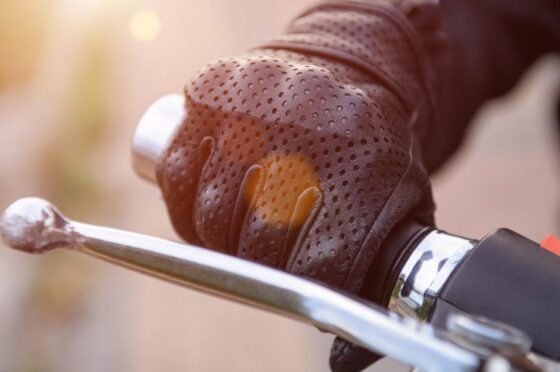
We did warn you it wasn’t pleasant! To help reduce the severity of suffering this kind of injury, make sure to wear protective clothing and equipment, such as leather gloves and boots, when riding a motorcycle.
Burns
A burn following a motorcycle accident is an injury to the skin or other body tissue usually caused by heat or due to friction.
Heat burns occur when some or all of the cells in the skin or other tissues are destroyed by hot liquids, hot solids (such as a hot exhaust pipe), or flames. Burns can be annoying inconveniences or serious, life-threatening emergencies.
What are the three different types of burns?
Burns are medically categorised depending on how deeply the skin has been damaged. It can take time for the signs and symptoms of a severe burn to develop.
1st-degree burns are a minor injury that affects only the outer layer of the skin, causing redness and mild pain.
2nd-degree burns affect both the first and the second layer of skin, which may cause swelling and red, white or blotchy skin. Blisters can develop following second-degree burns and pain can be severe. Deep second-degree burns can cause permanent scarring.
3rd-degree burns reach to the fat layer beneath the skin. Burned areas may be black, brown or white. The skin may look leathery and this type of severe burn can destroy nerves, causing the loss of sensation or feeling in a part of your body.
Road rash
Road rash or gravel rash is one of the most common types of motorcycle-related injuries. This is where the skin is badly scraped by highly abrasive asphalt surfaces, as a motorcyclist slides along the ground following a crash.
How painful is road rash?
Road rash can affect any part of the body and there are varying levels of severity. Light road rash, affecting the top of layer skin, can be easily treated and usually heals quickly. More severe road rash that penetrates through to the second layer of skin and even into the layer of fat beneath the skin can be incredibly painful and take months to heal. Treatments include bandaging, skin grafts and reconstructive surgeries.
Although it is very common, it is one of the easiest motorcycle injuries to avoid, simply by wearing proper protective motorcycle clothing, including gloves and boots.
Facial fractures
Facial fractures are fractured or broken bones of the face and mouth, caused by some kind of blunt trauma to the face.
If there’s one type of motorcycle accident that might encourage riders to wear a full-face crash helmet as opposed to an open-face helmet, it’s facial fractures.
What causes a facial fracture?
They commonly include fractures of the upper jaw, lower jaw, cheeks, and nose or eye sockets. A closed fracture is one in which the skin is not broken. An open or compound fracture involves laceration of the skin.
What are the symptoms of facial fractures?
Facial fractures can result in considerable pain, swelling and discomfort. In extreme cases facial fractures can result in disfigurement, which can have profound psychosocial implications, including altered body image, reduced quality of life, and poor self-esteem.
Scarring
Scarring is part of the body’s incredible natural healing process after the skin has been cut or damaged.
When the skin is wounded, the tissues break apart, which causes a protein called collagen to be released. Collagen builds up where the tissue is damaged, causing a scar, helping to heal and strengthen the wound.
Scars appear in many different shapes and sizes, depending on the severity of the wound. Some are large and painful, while others can be smooth and barely visible.
What are keloid scars?
Raised scars, also known as keloids, grow and extend beyond the injured area. Depending on their size, type and location, keloid scars can look unsightly and may even restrict body movement.
Treatments can reduce any discomfort and help scars heal faster, but many simply fade away over time as the body repairs itself.
Let us help you
If you or a loved one has suffered an injury as a result of a motorbike accident our motorbike accident solicitors are here to listen and offer their support. If you are ready to take the next step our experts are happy to have a free, no obligation conversation with you today.
Our awards
-

THE TIMES BEST LAW FIRM
-
CHAMBERS TOP RANKED LAW FIRM
-
LEGAL 500 TOP TIER FIRM
-
ARMED FORCES COVENANT
-
AVMA - LAWYERS’ SERVICE MEMBER
-
HEADWAY ACCREDITED SOLICITORS
-
SIA - TRUSTED LEGAL PARTNER
-
CBIT - TRUSTED LEGAL PARTNER










Start your claim with confidence
Not sure where to start? We’ll listen, guide you, and give clear, honest advice on what to do next.